Classical Astronomy & Astrology
STEP 15° · FOV 75° · FACING 250°

Classical & Hellenistic astrology

An astrologer that can't make things up.

Every answer is cast from the real geometry of your birth sky, judged by classical and Hellenistic doctrine, and checked against your own chart before it ever reaches you.

Ibn al-Shatir's geocentric engine, validated live against NASA JPL Horizons
whole-sign houses, seven planets, five aspects, the full essential dignity
your first complete reading is free · 26 languages · no account

What it computes

The canon, worked in full

The engine judges by the methods traditional astrologers actually used, not a modern rewrite of them. Each is calculated for your chart and shown with its result.

I

Whole-sign houses

The oldest house division. Each sign is one place, counted from the rising sign.

II

Sect

Day chart or night chart. It sets which planets ease the life and which press on it.

III

Essential dignity

Rulership, exaltation, triplicity, bound and decan, scored for every planet.

IV

The Egyptian bounds

The Egyptian term rulers, degree by degree, for the finer grade of judgement.

V

The Hermetic Lots

Fortune, Spirit, Eros and the rest, each computed by day and by night.

VI

Annual profections

The ruler of the year, found by counting places from the Ascendant.

VII

Primary directions

Timing by the sky's own turning, the oldest predictive method in the tradition.

VIII

The classical aspects

Conjunction, sextile, square, trine and opposition, weighed as the tradition weighs them.

What you get

Four pillars, one geometry underneath them all.

A personal Hellenistic astrologer, a full natal reading, relationship synastry, and the living sky. The same computed positions feed every one of them.

The AI astrologer

Ask anything about your chart. It answers as a classical astrologer would, from a sealed set of facts computed for your birth moment and nothing else. Every claim is checked against your own figures before you read it.

The natal reading

Ptolemy's Tetrabiblos, computed live: seven planets, whole-sign houses, the full dignity stack, transits, annual profections and solar returns. Every topic ends in a verdict, with the physical mechanism stated.

Synastry

What the sky means for two people. Twelve bond modes — marriage, friendship, business, mentor, family and more — each scored to a single verdict band, grounded in Tetrabiblos IV.5.

The living sky

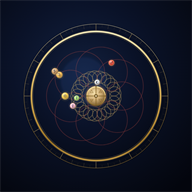
One geocentric engine, four surfaces: a deferent-and-epicycle orrery, a first-person dome over any date and latitude, a walk-in 3D theatre, and an augmented-reality overlay on your phone's camera.

Why it can be trusted

It shows its work.

Every judgement cited

Traditional astrology is written doctrine, not opinion. Each reading names its source, so you can check it. Ptolemy, Dorotheus, Vettius Valens, Firmicus Maternus and Paulus Alexandrinus, quoted by chapter. A claim that cannot be sourced is not made.

Deterministic by design

The interpretation is computed, not written by a language model. The same birth data yields the same reading, to the letter, every time. The engine evaluates the doctrine and states the result.

Two registers, kept apart

Classical doctrine speaks in its own voice, physical and direct. A separate, clearly labelled modern reading follows for those who want it. The two are never blended, so you always know which tradition you are reading.

Ask in plain language

An astrologer that answers from the chart, and only the chart.

When you would rather ask a question than read a table, the astrologer answers from the sealed computation and nothing else. It narrates the chart's own facts, cited as always, and never invents a technique it does not hold.

You are charged only when a grounded answer reaches you. The astrologer answers in English for now.

"Will I find lasting love, and when?"

Your seventh place is ruled by Venus, who sits in her own bound in the eleventh, received by the Sun. The testimony is favourable and social. The profected year turns to that same eleventh place at twenty-nine, which is when the tradition would have you look for it.

TETRABIBLOS IV.5 · DOROTHEUS II · VALENS IV

The celestial clock

Every eclipse, 3996 BC to AD 3648.

The app carries the complete Dimbleby eclipse catalogue — 35,387 solar and lunar eclipses — and finds the next one not by running an ephemeris but by locating a date in the repeating pattern: the 18-year team, the Saros and Inex series, the 649-year Date-Repeating Cycle. It is deterministic and offline.

Magnitudes and γ after Meeus; the cycle framing after J. B. Dimbleby, reconciled to the Saros/Inex lattice and validated against the NASA/Espenak–Meeus catalogue.

Next total solar eclipse

2026-08-13 · Total
Saros series 126 · team 334, line XIV
649-cycle 10, year 184 · A.M. 6025

Located purely by the Saros–Inex cycle lattice

What readers say

Unsolicited, and unedited.

Real responses to birth-chart readings cast by the app, posted in astrology communities and sent by message. Not one was asked for.

This is traditional astrology, which I love. Well done, St. Pierre!

Lisa K.Observational Astrology community

View on Facebook ↗

I need a minute to let this sink in, but I wanted to thank you first. It's spot on. Holy smokes. You're good!

ShinyPineapple7755Observational Astrology community

View on Facebook ↗

This resonates greatly with my lived experience. I appreciate the tone of the reading and the information provided. I have no problem with using AI. I will follow up and check out your app.

Jani M.Observational Astrology community

View on Facebook ↗
Returned unprompted

WOW! This was so beautifully explained and honestly gave me so much hope and inspiration. Really made me want to shift how I've been seeing everything in my life. I was so lost.

Michaela O.Reader message

Wow, I love how you broke down the inner conflict in the chart. I have lots of contradictory combinations in my chart too. I'll definitely try to find the app you mentioned.

Pamela B.Observational Astrology community

View on Facebook ↗

I can't explain how much this touches my soul. Everything you said is like, it's still hope. I can make it.

Community memberObservational Astrology community

View on Facebook ↗
Returned unprompted

I want to personally thank you for reading my chart and explaining it in a way I can understand. You don't know what you just did for me. Everything you stated is 100% correct. I will keep your message and read it when I don't think I can go on.

Candace K.Reader message

This is goosebumps, as if you read my entire personality. I have known ever since that I am impulsive, but now I know.

GorgeousLychee6510Observational Astrology community

View on Facebook ↗

Thanks very much for the detailed reading. It resonated deeply. I can't access the app since I have an iPhone, but I'd be interested. Thanks again!

RedRambutan7606Observational Astrology community

View on Facebook ↗

The founder's story

I built this to settle an argument with myself.

I did not come to astrology the way most people do. There was no reading that changed my life, no family tradition, no moment of mystery. I came to it the way an engineer comes to a claim that annoys him. I wanted to take it apart.

So I made myself a rule. I would not argue with astrology. I would build it, all of it, from first principles, and let the machine tell me what was there.

Building the machine

I started with the sky itself. The engine at the heart of this app reconstructs the geocentric model of Ibn al-Shatir, the fourteenth-century Damascus astronomer whose double-epicycle geometry was the finest planetary machinery of the pre-telescope world. Not a shortcut, not a lookup table pretending to be a model. The actual geometry, computed live, drawing the sky the way the classical astrologers understood it.

Then I checked it against the best answer humanity has, NASA JPL Horizons. Where the old model and the modern one disagree, the app tells you. Where your chart is cast, it is cast from the modern figures, because if I was going to test a tradition, I refused to let it fail on arithmetic that wasn't its fault.

And I made one rule absolute. No invented facts. Every dignity, every aspect, every verdict traces to a computed position or to a cited passage, and the citations come from one book, Ptolemy's Tetrabiblos in the 1822 Ashmand translation, checked against the actual text, chapter by chapter. That is why every reading ends with its receipts. If a claim has no source, the app is built to stay silent rather than improvise.

Then I ran my own chart

This is the part where I'm supposed to tell you about the night everything changed. It wasn't like that. It was a test, like the hundreds before it, and I read the output the way I read any output, looking for what it got wrong.

The problem was the trait descriptions. They were spot on. Not vaguely on, not horoscope-on, the kind of on where specific, verifiable statements about how a person operates kept matching the person. I checked those claims against the one subject I have complete data on, and they held. One result is an anecdote, and I know better than to publish an anecdote. So I kept testing.

I tested it expecting it to fail, and it didn't.

What I believe now

I ran the engine against people whose lives are documented, well-known figures with public records, where the chart's claims could be checked against biography instead of against my own bias. The result, stated as plainly as I can. Given a birth chart and nothing else, this method regularly identifies key personality traits, in context, at a rate I could not explain away and stopped trying to.

The cause is a complete mystery to me. I have no mechanism to offer you. I don't know why the positions of the planets at the moment of birth would correlate with anything about a person, and I won't insult you by inventing one. I've settled the first question to my own satisfaction. The second I leave open, the way you leave any good problem open.

This app makes you the same offer the engine made me. It will never soften a verdict to flatter you. It will never invent a fact to fill a silence. It will refuse to predict what the tradition does not claim to predict. And under every reading, it will show you exactly where each statement came from, the degree, the dignity, the aspect, the chapter, so you can check it yourself.

A reading you can check. That is the entire point.

The FounderCreator of Classical Astronomy & Astrology

Learn classical astrology

The doctrine, in full — and free.

The whole of what the engine judges, taught from the sources. Three guides carry the tradition from the natures of the seven planets to the configurations, dignities and Lots by which a nativity is weighed. Every claim is sourced to the work and chapter it comes from, in the editions the app cites.

Part I

The Seven Planets

Natures of the wandering stars

The seven wandering stars are the active causes of the nativity, and each carries a fixed nature. They do not take their meaning from where they fall; they arrive with their own temper, and the sign, the place and the configuration show only how that nature is delivered — cleanly or in distortion. To read a chart is first to know these seven natures, and then to weigh how each one stands.

The doctrine of sect

Before any single planet is judged, the chart is divided into day and night — its sect. The chart is diurnal when the Sun stands above the horizon at birth, nocturnal when it is below. By day the Sun (☉), Jupiter (♃) and Saturn (♄) keep their own sect and act most favourably; by night the Moon (☽), Venus (♀) and Mars (♂) keep theirs. Mercury (☿) takes the sect of the half of the sky it is found in. A planet that keeps the sect of its chart is steadied and tempered; the same planet out of sect grows erratic or obstructed.

A malefic out of sect is at its most harmful — Mars by day, or Saturn by night, brings its cutting or its constriction with the least restraint; an in-sect malefic does its hard work with discipline. A benefic out of sect gives less than it promises. The sect light — the Sun by day, the Moon by night — is the chief significator of the life and is weighed before all else. This is why sect is read first: it is not one testimony among many but the frame within which every other testimony is measured.

Diurnal and nocturnal: when the Sun is above the horizon at the moment of nativity the chart is reckoned of the day, and the planets of the day-sect impart their good according to their proper temperament; the reverse holds by night.

Ptolemy, Tetrabiblos I.7 (Ashmand 1822) — “Diurnal and Nocturnal”

The four qualities

Every planet's nature is built from the four primary qualities — hot and cold, moist and dry: the physical causes by which the heavens act on the sublunar world. Heat generates and separates; cold binds and condenses; moisture softens and joins; dryness hardens and divides. From these mixtures follow benefic and malefic. The two benefics, Jupiter and Venus, are temperately warm and moist, and so preserve and bestow; the two malefics, Saturn and Mars, hold an excess of cold or of heat joined to a parching dryness, and so constrain and destroy. Yet the verdict is never absolute: a well-conditioned malefic builds and disciplines, and an afflicted benefic indulges and dissipates. Mercury is mixed by definition — benefic with the benefics, malefic with the malefics.

The Sun is hot and vital; the Moon cold and moist, governing the body and all that grows and changes. Saturn is cold and dry, and contracts, delays and binds; Jupiter temperate and warm, and enlarges and bestows; Mars hot and dry, and cuts and forces; Venus warm and moist, and joins and adorns; Mercury dry and mixed, taking the nature of whatever it is joined to.

after Ptolemy, Tetrabiblos I.4 (Ashmand 1822) — “The Influences of the Planetary Orbs”

The seven natures

The Sun (☉) — hot and moderately dry, the diurnal luminary and source of the life-giving heat. It signifies honour, rank and the governing principle of the life, and the father. Well dignified and in sect it confers natural authority and visible achievement; afflicted or in its fall, a dimmed light, recognition struggled for or authority misused. Because it also burns, a planet drawn within about eight degrees is rendered combust, its significations obscured.

The Moon (☽) — cold and moist, the nocturnal luminary, significator of the body, the feelings, the mother and the early years. Strong by phase and sign it gives a sound constitution and a feeling nature in harmony with its circumstances; afflicted or waning to nothing, an unsettled inner life and a body prone to flux. As the swiftest body it gathers the light of every planet it applies to, and so threads the whole figure together.

Saturn (♄) — cold and dry in the extreme, the greater malefic; of the day sect, doing least harm by day and most by night. It contracts, delays and binds, and signifies time, limit, labour and endurance. Well conditioned and in sect it gives gravity, patience and structural mastery — the capacity to build slowly and hold what is built; debilitated or out of sect, heaviness, fear, isolation and want.

Jupiter (♃) — temperately hot and moist, the most balanced mixture and the greater benefic; most generous by day. It enlarges, preserves and bestows, and signifies increase, fortune, patronage, faith and higher learning. Well placed it confers good fortune and breadth of vision; out of sect or in its fall it overreaches — a reach exceeding its grasp, abundance turned to extravagance.

Mars (♂) — hot and dry in the extreme, the lesser malefic; of the night sect, doing least harm by night. It cuts, divides and forces, and signifies strife, courage, iron and desire. In sect it gives decisive courage and drive, violence disciplined into useful force; out of sect or in its fall, rashness, reckless haste, the cutting that wounds where it should heal.

Venus (♀) — moist and temperately warm, gentle and joining, the lesser benefic; most graceful by night. She joins, softens and adorns, and signifies love, beauty, concord and pleasure. Well dignified she confers a gift for harmony and attachment and the favour of others; afflicted, difficulty with attachment and pleasure pursued to no profit.

Mercury (☿) — dry but variable, the one planet without a fixed temper, taking the nature of whatever it is joined to; its sect likewise mixed. It governs reason, speech and exchange — the rational soul, judgement, language and commerce. Well dignified and clear of the beams it gives keen reasoning and clean communication; combust or debilitated, a mind sharp but ill-governed. Because it is never far from the Sun, it is the planet most often hidden under the beams.

PlanetNatureSectDomicilesExaltationGoverns
SunHot, moderately dry · moderateDay (leader)LeoAries 19°Honour, vitality, the governing principle; the father
MoonCold, moist · variableNight (leader)CancerTaurus 3°Body, feeling, growth and change; the mother
SaturnCold, dry · greater maleficDayCapricorn, AquariusLibra 21°Limit, time, endurance; contracts, delays, binds
JupiterWarm, moist · greater beneficDaySagittarius, PiscesCancer 15°Increase, fortune, faith; enlarges, preserves, bestows
MarsHot, dry · lesser maleficNightAries, ScorpioCapricorn 28°Strife, force, desire; cuts, divides, forces
VenusMoist, warm · lesser beneficNightTaurus, LibraPisces 27°Love, beauty, concord; joins, softens, adorns
MercuryDry, variable · mixedMixed (Sun's half)Gemini, VirgoVirgo 15°Reason, speech, exchange; the rational soul
Seen in a real chart

Consider Mercury (☿) in Virgo — its own domicile and its exaltation, the strongest a planet can stand by sign. Reason and analysis are promised in abundance. But suppose Mercury sits within five degrees of the Sun, drawn under the beams and rendered combust. Now the same planet is essentially strong yet accidentally hidden. The reading must hold both: real analytical brilliance — the dignity is unimpeachable — but routed through the Sun's glare, slow to be recognised. The verdict is neither “brilliant” nor “thwarted” but the precise tension between them. One planet, read in its nature, its dignity and its sect together — that is the whole of the art in miniature.

Part II

The Signs & the Houses

The zodiac and the twelve places

If the seven planets are the actors, the zodiac is the stage on which they move and the twelve places are the scenes into which it is divided. A planet takes its quality from the sign it occupies and its topic from the place it falls into. The sign tells how a planet behaves; the place tells where its working is felt.

The tropical zodiac

The zodiac is divided into twelve signs of thirty degrees, completing the circle of 360. Ptolemy measures these not from the fixed stars but from the moving points of the seasons: the first degree of Aries is set at the vernal equinox, where day first equals night. This is the tropical zodiac, anchored to the turning-points of the Sun's annual path — the zodiac this app computes. The sign names a thirty-degree quality of season rather than a picture in the stars.

The earth holds the centre of the heavens and the celestial sphere turns daily about it; this is the frame within which every observed position is reported. The Sun's annual track, the ecliptic, is inclined to the celestial equator by about 23.4°, and the band of twelve signs is centred upon it.

after Ptolemy, Almagest, Book I (Halma 1813–1816, paraphrased)

The four elements & triplicities

The twelve signs are distributed among the four elements; because each element claims three signs spaced four apart, each set of three is a triplicity whose signs stand in trine. Each is governed by a college of rulers — a day lord, a night lord and a participating co-ruler — and which is in office depends on the sect of the chart. The triplicity lords show the support a matter draws across the three thirds of life; a significator holding its own triplicity is granted a steady, structural strength even where it lacks domicile or exaltation.

  • Fire — Aries, Leo, Sagittarius: hot and dry, vehement, of the choleric humour.
  • Earth — Taurus, Virgo, Capricorn: cold and dry, dense and retentive, of the melancholic humour.
  • Air — Gemini, Libra, Aquarius: hot and moist, light and communicative, of the sanguine humour.
  • Water — Cancer, Scorpio, Pisces: cold and moist, yielding and receptive, of the phlegmatic humour.

The triplicities distributed among the planets by sect: the fiery, hot and dry and choleric; the watery, cold and moist and phlegmatic; each governed by a lord of the day and a lord of the night, with a third participating.

Ptolemy, Tetrabiblos I.21 (Ashmand 1822) — “The Triplicities”

The three modes

Crossing the four elements is a division into three modes, each claiming four signs. Where the triplicity gives a sign its substance, the mode gives it its manner of action. Cardinal (Aries, Cancer, Libra, Capricorn) initiate — the signs on which the seasons turn. Fixed (Taurus, Leo, Scorpio, Aquarius) consolidate — the height of each season, holding and making durable. Mutable (Gemini, Virgo, Sagittarius, Pisces) adapt — each season's close, partaking of two natures at once. Every sign is read as a marriage of the two divisions: Aries is cardinal fire, quick to begin; Scorpio is fixed water, unyielding in purpose.

SignElementModeRulerExaltation
AriesFireCardinalMarsSun
TaurusEarthFixedVenusMoon
GeminiAirMutableMercury
CancerWaterCardinalMoonJupiter
LeoFireFixedSun
VirgoEarthMutableMercuryMercury
LibraAirCardinalVenusSaturn
ScorpioWaterFixedMars
SagittariusFireMutableJupiter
CapricornEarthCardinalSaturnMars
AquariusAirFixedSaturn
PiscesWaterMutableJupiterVenus

The ruler is the sign's domicile lord, most at home there and most able to act on its own authority; the exaltation names the planet honoured there as an esteemed guest, raised to act with heightened — though borrowed — dignity. These rulerships are the first and strongest of the essential dignities, treated in Part III.

The twelve places

The twelve places are fixed to the local horizon and counted by whole sign from the Ascendant: the whole sign rising is the first place, the next sign in order the second, and so on, each place coinciding with one entire sign. They differ first in strength by their relation to the angles. The angular places (1st, 10th, 7th, 4th) are the most powerful and bring their matters to pass soonest; the succedent (2nd, 5th, 8th, 11th) hold and consolidate; the cadent (3rd, 6th, 9th, 12th) fall away from the angles and are weakest. Each planet also owns one place where it most rejoices — its house of joy.

HouseNameSignifies
1 (angle)Life · HoroscopeThe body, vitality, constitution and vital force; the outward presence and the early years.
2 (succ.)LivelihoodWealth, possessions and material sustenance. Co-signified by the Lot of Fortune.
3 (cadent)Siblings · GoddessBrethren, short journeys, neighbours, early learning. The joy of the Moon (☽).
4 (angle)Parents · Lower HeavenThe father, home, land, ancestry; the foundations and the end of the matter.
5 (succ.)Children · Good FortuneOffspring, pleasure and creative works. The joy of Venus (♀).
6 (cadent)Sickness · Bad FortuneBodily afflictions, servants, daily labour, enemies within. The joy of Mars (♂).
7 (angle)Marriage · DescendantPartnerships, marriage, open enemies and public contracts.
8 (succ.)Death · Idle PlaceLegacies, others' resources, crises and the manner of death.
9 (cadent)Journeys · GodLong travel, philosophy, religion, foreign lands. The joy of the Sun (☉).
10 (angle)Honour · MidheavenOccupation, rank, reputation, action in the world, and the mother.
11 (succ.)Friends · Good SpiritFriends, benefactors, patrons, hopes and alliances. The joy of Jupiter (♃).
12 (cadent)Hidden Enemies · Bad SpiritSecret foes, exile, confinement and self-undoing. The joy of Saturn (♄).

Ptolemy himself reads many topics chiefly from the planetary significators and the angles — wealth through the Lot of Fortune, rank through the lights and the Midheaven. The full twelve-place topical grid above is the common-Hellenistic synthesis later authors built on that foundation. The app honours both: the place names its topic, while the significators and the lord of the place carry the verdict.

The whole-sign house scheme, the annual profection of the Ascendant and the topical grid of the twelve places are drawn from the Hellenistic tradition Ptolemy's successors systematised.

Vettius Valens, Anthologiae (Riley trans.); extended by Firmicus Maternus, Mathesis, and Manilius, Astronomica
Seen in a real chart

Take Venus (♀), lesser benefic of the night sect, in Libra upon the seventh place of marriage. From the sign she draws her quality: Libra is her own domicile, so she acts from a seat of authority, sociable and inclined to concord. From the place she draws her topic: the seventh is the angle of partnership, and an angular planet acts at the full of its strength. The natural significator of love, dignified in her own sign and set on the very angle that governs marriage, promises a union willing, harmonious and lasting. Were the same Venus in Aries, her detriment, and cast into the cadent twelfth, the promise would stand but its delivery would falter.

Part III

Aspects, Lots & Dignity

Configurations, parts, and condition

Three instruments weigh a nativity once the planets, signs and places are set. Configuration — how the planets see one another across the wheel. Essential dignity — how strongly each stands to act on its own authority. And the Lots — derived points read like the degree of a planet. Aspect, dignity and Lot together turn a list of positions into a judgement.

The five configurations

Ptolemy admits four figures by which one part of the zodiac beholds another, and the tradition adds the conjunction for five in all. Each is taken by whole sign: it is the signs that see, and the planets within them that deliver the seeing. Two planets in signs joined by no figure cannot reach each other — a condition called aversion, the negation of aspect.

  • Conjunction (☪) — 0°, same sign. Neutral; takes its quality wholly from what is joined. Benefic with benefic doubles the fortune; malefic with malefic doubles the damage.
  • Sextile (⛌) — 60°, two signs, complementary elements. The lesser harmonious figure: mild, supporting, the aspect of cultivated skill and opportunity that must be taken up.
  • Square (□) — 90°, three signs, contrary quality and sex. The more active of the harsh figures: friction, effort, action carried under strain.
  • Trine (△) — 120°, four signs, one element. The most favourable: benefit flowing without contest; its very ease is its weakness.
  • Opposition (☧) — 180°, six signs. The most openly discordant: contention and division, the matter brought fully to light, often by an outward force.

Mutual configuration attaches to parts diametrically distant, at the triangular distance, the quadrate, and the hexagonal. Of these the trine and sextile are harmonious, being between signs of the same kind; the opposition and quartile are discordant, between signs of different natures and sexes.

Ptolemy, Tetrabiblos I.16 (Ashmand 1822) — “Mutual Configurations of the Signs”

Application, separation & orbs

An aspect is a regime with a past and a future, read from the motion of the swifter planet toward the slower. While the faster planet approaches the exact degree the contact is applying — rising in force; once past, it is separating — spent. A tight applying aspect outweighs a wide one of the same figure. An aspect exact to the degree is partile; one within the allowed margin but not exact is platic. That margin is the orb, and it belongs to the planets themselves: each carries its own, and the half of it — the moiety — is what it contributes to a contact. The Sun's orb is widest at 17°, the Moon's 12½°, Jupiter's 12°, Saturn's 10°, Venus's 8°, Mars and Mercury 7½° each.

Application and separation, and the orbs and moieties by which the planets reach one another: the closeness of the degrees measures the intensity of the contact, not whether it exists.

Ptolemy, Tetrabiblos I.27 (Ashmand 1822) — “Application, Separation, and Other Faculties”; orb-and-moiety practice after Bonatti, Liber Astronomiae

Combustion, cazimi & under the beams

The Sun's nearness is a power apart from aspect. A planet within about eight degrees of the Sun is combust — burned by the solar ray, its signification obscured and suppressed. Yet at the very centre the rule reverses: a planet within seventeen minutes of the Sun's exact degree is cazimi, in the heart of the Sun, fortified and made to act with kingly authority — the strongest accidental dignity a planet may receive. Between the two lies under the beams (within about 15°): weakened and dimmed, able to act but not freely. The heliacal doctrine is Ptolemy's; the precise orbs are refinements of the later Arabic tradition.

A planet drawn within about eight degrees of the Sun is combust, its significations consumed in the greater fire; within seventeen minutes it is cazimi and ennobled. The heliacal phase is Ptolemy's; the numeric orbs are an Arabic-tradition refinement.

Ptolemy, Tetrabiblos, Book III (heliacal-phase doctrine); orbs after Abu Ma’shar, Kitab al-Madkhal, and Bonatti

Essential dignity

Where aspect shows which planets a significator talks to, dignity shows how strongly it stands to act on its own authority in the sign it occupies. Ptolemy sets down five essential dignities in descending grade, and the tradition assigns each a weight so a planet's total strength may be summed. Against these stand the debilities: detriment, the sign opposite domicile; fall, the sign opposite exaltation. A planet holding none of the five and neither debility is peregrine — a wanderer without authority. Where several dignities gather on one planet it rides in its chariot; by summing grades across the Ascendant, the lights and the Lot of Fortune, the tradition finds the almuten of a place.

DignityScoreMeaning
Domicile+5Planet in its own sign — full native authority
Exaltation+4Honoured guest — heightened but borrowed virtue
Triplicity+3Elemental rulership by sect — structural strength
Term (bound)+2Rulership of an unequal segment of the sign
Face (decan)+1Rulership of a 10° third of the sign
Detriment−5Sign opposite domicile — exiled, hindered
Fall−4Sign opposite exaltation — humbled, obstructed
Peregrine0No dignity at all — wandering without authority

The five essential dignities — house, exaltation, triplicity, term and face — and their debilities, detriment and fall. The assignments are Ptolemy's; the additive point scale (+5/+4/+3/+2/+1, detriment −5, fall −4) is the medieval convention.

assignments: Ptolemy, Tetrabiblos I.20–I.24 (Ashmand 1822); point scale after al-Biruni (1029) and William Lilly, Christian Astrology (1647)

The Egyptian terms

The terms, or bounds, divide each sign not into equal parts but into five unequal segments, each governed by one of the five non-luminous planets — Saturn, Jupiter, Mars, Venus, Mercury. The Sun and Moon never rule a term. Sixty bounds in all divide the zodiac, and a planet within its own bound earns the +2 wherever else it stands. The app follows the Egyptian set of terms — the scheme Ptolemy reports in his chapter on the disposition of the terms, and a deliberate, recorded departure from Ptolemy's own table. In Aries: Jupiter rules 0°–6°, Venus 6°–12°, Mercury 12°–20°, Mars 20°–25°, Saturn 25°–30°. The other eleven signs each carry their own ordering, no two alike.

The terms divide each sign into five unequal parts, each assigned to one of the five planets, the Sun and Moon excepted. The app uses the Egyptian scheme Ptolemy reports and prefers — the chapter where he sets it beside, and criticises, his own terms of I.24.

Ptolemy, Tetrabiblos I.23 (Ashmand 1822) — “The Disposition of the Terms” (the Egyptian bounds; Ptolemy’s own terms of I.24 are not used)

The Lots — Fortune & Spirit

The Lots, called by the Arabs the Parts, are sensitive points constructed by measuring the arc between two significators and projecting it onward from the Ascendant. They are not bodies but calculated places, read by the sign that holds them, the place they fall in, and above all the condition of the Lot's lord. The chief is the Lot of Fortune (⊕): by day the arc from the Sun to the Moon laid off from the Ascendant — Fortune = Asc + Moon − Sun — and reversed by night. Fortune is the Lot of the body and the material life: the fortune one is given rather than chosen. Its mirror is the Lot of Spirit (⊗), the same arc reversed — the soul in action, the works one sets in motion. Fortune and Spirit divide the life into what is given and what is undertaken.

The Lot of Fortune is taken by projecting from the ascendant the distance from the Sun to the Moon, so that the Moon stands to the Part as the Sun stands to the ascendant; its place declares the bodily fortune of the native. Spirit is a post-Ptolemaic addition of the Hellenistic authors.

Ptolemy, Tetrabiblos IV.2 (Ashmand 1822) — “The Fortune of Wealth”; the sect-reversed Fortune and the Lot of Spirit from Valens and Paulus Alexandrinus
Seen in a real chart

Consider a nocturnal nativity with the Moon at 8° Cancer and Mars at 7° Libra — a partile square, exact almost to the degree and applying, the swifter Moon closing on the aspect. A malefic pressing the Moon by a tight applying square is among the more forceful afflictions a chart can carry. But the weight turns on condition. The Moon at 8° Cancer sits in its own domicile (+5) — able to absorb the blow from a seat of authority. Mars at 7° Libra sits in its detriment (−5), an exiled malefic striking against its own grain. Reverse the dignities — a strong Mars squaring a peregrine Moon — and the same ninety-degree figure reads far harsher. The aspect names the conversation; dignity decides who speaks from strength.

Sources. Every citation above resolves to the edition the app cites, verified against its in-tree corpus of record.
Ptolemy, Tetrabiblos — J. M. Ashmand, London 1822 (chapter numbers are Ashmand's). Ptolemy, Almagest — N. Halma, Paris 1813–1816.
Vettius Valens, Anthologiae · Paulus Alexandrinus, Eisagogika · Dorotheus, Carmen Astrologicum · Firmicus Maternus, Mathesis · Manilius, Astronomica — whole-sign houses, profections, the Lots and the house-topic grid.
Abu Ma’shar · al-Biruni (1029) · Guido Bonatti · William Lilly, Christian Astrology (1647) — reception, the solar phases, orbs and the dignity-point scale.
Ibn al-Shatir, Nihayat al-Sul (Damascus, c. 1350) — the geocentric engine, validated live against NASA JPL Horizons.

Where to read your chart

Get it

Android

On Google Play

The full engine, the interpretation, the wheel and the astrologer. A one-time unlock, no subscription.

Get it on Google Play
iPhone & iPad

In preparation

The iOS build is on the way. The same engine, the same doctrine, the same sources.

Coming soon
Desktop & web

Free in your browser

The classical calculation, the wheel, the dignities and every PDF export, at no cost. No account, nothing to buy.

Open it free