Classical Astronomy & Astrology
The canonDoctrineSynastryFree chartHome
The founder's story
I did not come to astrology the way most people do. There was no reading that changed my life, no family tradition, no moment of mystery. I came to it the way an engineer comes to a claim that annoys him. I wanted to take it apart.
So I made myself a rule. I would not argue with astrology. I would build it, all of it, from first principles, and let the machine tell me what was there.
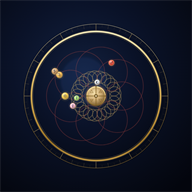
I started with the sky itself. The engine at the heart of this app reconstructs the geocentric model of Ibn al-Shatir, the fourteenth-century Damascus astronomer whose double-epicycle geometry was the finest planetary machinery of the pre-telescope world. Not a shortcut, not a lookup table pretending to be a model. The actual geometry, computed live, drawing the sky the way the classical astrologers understood it.
Then I checked it against the best answer humanity has, NASA JPL Horizons. Where the old model and the modern one disagree, the app tells you. Where your chart is cast, it is cast from the modern figures, because if I was going to test a tradition, I refused to let it fail on arithmetic that wasn't its fault.
And I made one rule absolute. No invented facts. Every dignity, every aspect, every verdict traces to a computed position or to a cited passage, and the citations come from the classical sources themselves, Ptolemy's Tetrabiblos in the 1822 Ashmand translation first among them, with Dorotheus, Valens, Firmicus and Paulus where the tradition draws on them, each checked against the text chapter by chapter. That is why every reading ends with its receipts. If a claim has no source, the app is built to stay silent rather than improvise.
This is the part where I'm supposed to tell you about the night everything changed. It wasn't like that. It was a test, like the hundreds before it, and I read the output the way I read any output, looking for what it got wrong.
The problem was the trait descriptions. They were spot on. Not vaguely on, not horoscope-on, the kind of on where specific, verifiable statements about how a person operates kept matching the person. I checked those claims against the one subject I have complete data on, and they held. One result is an anecdote, and I know better than to publish an anecdote. So I kept testing.
I tested it expecting it to fail, and it didn't.
I ran the engine against people whose lives are documented, well-known figures with public records, where the chart's claims could be checked against biography instead of against my own bias. The result, stated as plainly as I can. Given a birth chart and nothing else, this method regularly identifies key personality traits, in context, at a rate I could not explain away and stopped trying to.
The cause is a complete mystery to me. I have no mechanism to offer you. I don't know why the positions of the planets at the moment of birth would correlate with anything about a person, and I won't insult you by inventing one. I've settled the first question to my own satisfaction. The second I leave open, the way you leave any good problem open.
This app makes you the same offer the engine made me. It does not soften a verdict to flatter you. Where it has no computed fact, it stays silent rather than fill the gap. It declines to predict what the tradition does not claim to predict. And under every reading, it will show you exactly where each statement came from, the degree, the dignity, the aspect, the chapter, so you can check it yourself.
A reading you can check. That is the entire point.
The FounderCreator of Classical Astronomy & Astrology
 Classical Astronomy & Astrology